Interview with Theo Bosboom

For the Dutch Version of the Interview Click Here
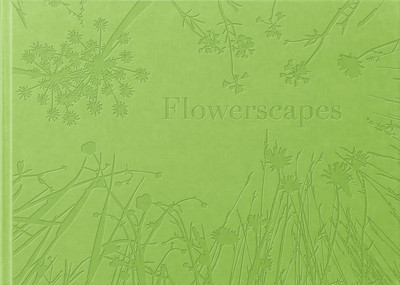
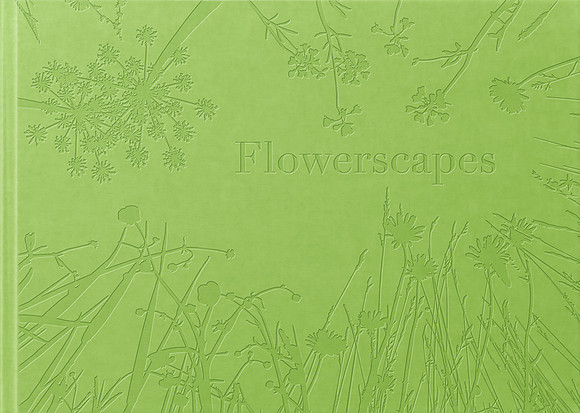
I have to start this post by promptly admitting to my love of photography books. I consider books to be wealth on paper. If you think about it like this, I must be pretty wealthy, because I have a large collection of photography books on my shelves. These books provide me with something that mindless scrolling on the ever so fleeting internet could never give me, which is the immersion into the world of the photographer and meeting his or her vision. Every now and then a book arrives that takes my breath away the moment I open the book. And every once in a while a sense of wonder radiates from the pages and takes me away into another magical world as seen and conveyed by another photographer. This is exactly what happened when, after a day of teaching a workshop, I was greeted by the book Flowerscapes by Theo Bosboom. The luminosity of the photographs, the life that just radiates from the pages, the wonder and reverence of nature...It took my breath away and with it some of the desperation I had been feeling over the state of nature in my home country of The Netherlands. The photos sparkle with hope and life and in a way it is humbling to witness the sublimity of nature and the subtle intricacies of her designs. It depicts life in her ultimate beauty which strives for just one thing : to grow, to come to fruition, to reach for the sky.

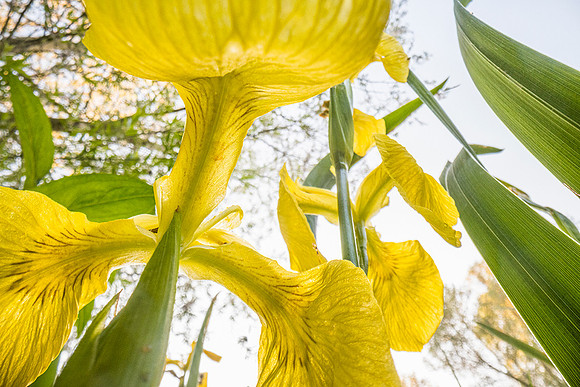
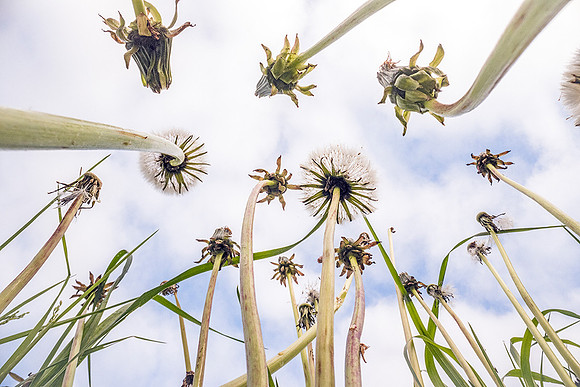
After flipping through just a few of the pages, I knew I wanted to speak to Theo about this book about the flowers most of us consider to be ordinary and which we pass every day without giving them a second glance. Theo photographed them as seen from an insect's point of view, looking up at the sky, the way we would feel amongst skyscrapers. We always think we know what the world looks like, but we see this from our own human perspective which is just one amongst many. The world Theo shows is one from the perspective of the small creatures that live at our feet, amongst the plants and shrubs.
I reached out to Theo, whom I had met before, asking him if he would be willing to answer a few questions (quite a few as it turns out ) about his book and he readily agreed. I wanted this to be a written interview, because I feel that this gives someone the opportunity to weigh his words and think about the replies a bit longer.
After this rather long introduction I will let you read the interview which I have posted on my blog in Dutch and English.
I can wholeheartedly recommend Theo's book Flowerscapes, A Bug's Eye View. It is beyond amazing. You can find the link to his store below the interview.
Interview
- I would like to start by congratulating you on this beautiful book which is oozing with wonder which bursts off of each and every page. The theme of the book, which celebrates the amazing beauty of what many of us consider to be ordinary weeds, is something that is very close to my heart. In chasing the epic, we so often oversee the beauty of what can be found closeby and in this case; at our feet.
- I believe that you photographed just native flowers and plants for this book. Did you make a plan beforehand of which flowers you wanted to photograph or did the collection evolve more organically?
The book is indeed focussed on the native varieties, even though the book also shows a few established species. I predominantly focussed on flowers that everyone knows and that are quite wide spread. With these flowers the alienating and surprising effect by photographing them from below was the greatest. I did have a few species on my wishlist, but apart from that the collection evolved naturally. Everywhere where I spotted beautiful and interesting flowers, I tried to photograph them well. When the idea for the book was there though, I tried to have sufficient variety in sorts of flowers and habitats (like forests, meadows and the coast)
- Even amongst these ordinary flowers there are real eyecatchers, but what I noticed when I showed the book to friends and relatives, is that many of them were touched by the ordinary and unassuming sorts of flowers that are sometimes even considered unwanted, like dandelions. Was it harder for you or perhaps rather a nice challenge for you to photograph these specific kinds of flowers in an attractive way?
I always like the challenge of capturing what we consider ordinary in nature in a new and different way. If this works out well, the attention of the public is the immediate result. By using this lens and the view from below I started to look differently at flowers as well. A flower that could be considered very photogenic, is not automatically photogenic when seen through this lens and vice versa. By the way, the Dandelion seed heads were on the top of my list to photograph with this lens, because I had pre-visualized how the pictures could look. I took many photos of them and it was a challenge to pick the one that would be included in the book, because I used just one photo per species.
- Did you wait for certain weather conditions for specific flowers or did you just go out with your camera to see what you could find?
It was important for this project to avoid an excess of wind just like in normal macro photography. As a result of being so close to the flowers, a little breeze would lead to an unsharp image. Apart from this, I often photographed in overcast conditions, because the background (which in this case is almost exclusively the sky) would be clean, even a bit studio-like, which would direct all the attention to the flowers. Every now and then clouds and a blue sky work in images like these, but I felt like they added a bit of chaos to the images.
- I read in the foreword of the book that you had had the idea for this project long before you could execute it and that the release of a special lens made it possible. Do you prefer working on projects and do you meticulously plan a project or is it more like a loosely defined concept?
For about ten years I have been working almost exclusively on projects. Very rarely do I go out to randomly take photographs and if I do, it is more like a pleasurable pastime in nature. Projects provide me with focus and a sense of calm in the field. In addition to that I feel like you can inject more of yourself into a project, because it is not just about the images, but also about the story and a combination of images and text.
I am not the kind of person that works with meticulously planned projects. It usually starts with a roughly defined theme. As the photography proceeds, the theme gets more and more defined. In the second part of the project I tend to work in a more targeted manner to, for example, add variety or search for the missing building blocks. It is almost always a process of advances in understanding and refining the theme. The benefit of this approach is that I can work freely in the beginning and not oversee opportunities because of my vision already being too narrow. I know of photographers who work with well defined plans for their projects that involve moodboards and such, but I could not work like this.
- Do you feel like you actually expanded your view by photographing this project, in which you have limited yourself to subjects close to home and seen from below using just one lens? How do you feel about limiting yourself in your photography? Is it something you seek out or do you like to keep all options open?
Absolutely. It is very interesting that you can expand your view by limiting your options. This ties in with working in projects. By spending more time on one subject and ignoring other options, you add more depth. You also gain more knowledge about the subject which leads to a deeper connection to it, which in turn makes you see and experience other things. As I mentioned in the previous answer, I like having direction and focus in my photography, for example by working in projects. Before I started doing this, I felt a bit restless when photographing, especially when the conditions were particularly good. I would want to do too much at the same time and had too much gear with me just because I did not want to miss an opportunity. Often the result of such a session would be that I had tried a lot and came home with lots of images, but that none of the images stood the test of time.
Then at one point I came across a quote by Ansel Adams: “Twelve significant photographs in any one year is a good crop.”. This was eye-opening to me. I thought: "that is just one really good photograph per month!" This thought gave me the peace to work more thoughtfully and peacefully on images and to not be afraid anymore to miss out on all the possibilities if I stayed on one spot for too long
- For this project you relied on one very specific type of lens. This lens enabled you to express your creativity. How important do you feel gear is in the photographic process and in what way is it important what gear you use?
Generally speaking I don't feel that gear is that important to express your creativity in photographs that stick. Of course there is something to be said for working with good material, but I think that in photography there is too much emphasis on the importance of gear and technique. But of course this project is an exception, because I could not have realized my vision without this specific lens. The same applies to earlier projects where I photographed under water, like "The Journey of the Autumn Leaves". There I could also not have realized my vision without very specific gear.
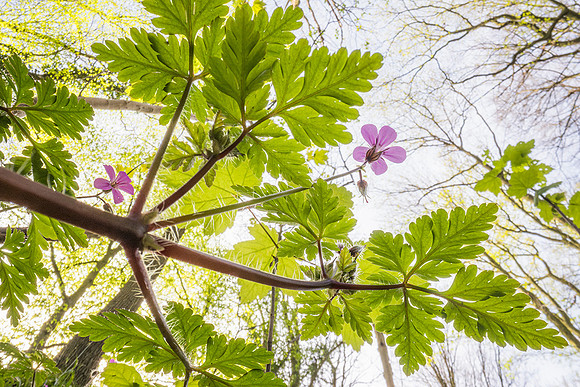
- In one of your other books "Back to Iceland" you are describing the alienation of nature that we experience in The Netherlands. Has this project helped you get over this feeling of alienation? I can imagine that the peace and quiet you are looking for is hard to find on roadsides. I myself often experience that sense of unease in nature because it is so rarely quiet and untouched by humans.
Just like you I prefer to work in the peaceful stillness of nature, that is when I feel the most comfortable and when I am able to make my best photos. But this is very hard in The Netherlands. You are very rarely alone and silence is very hard to find.
For this project it was even worse than usual, because I was photographing on the sides of busy roads and also in towns and villages, like in verges and waste grounds. This is not ideal for the ultimate nature experience, but I noticed that it did not matter for the images of this project. When you are looking up you can usually not make out if the photo was made in a piece of untouched nature or on a roadside verge along a busy provincial road. It taught me to sometimes lower my standards where it concerns the experiencing of nature for the sake of a better result.
- In your foreword in Flowerscapes you write that this project has given you back a bit of hope. It is all too easy to become disheartened when one walks around in nature in The Netherlands. I know I sometimes have to fight an emerging feeling of despair when I see the trees that I have known all my life crumble and fall at lightning speed. In your photos the hope becomes tangible because of the luminosity of the colours and the brightness of the images. How has this project changed your outlook on the future and made it look less bleak?
In the past few years I have felt on several occasions that the world and nature are a lost cause. The sheer amount of bad news is overwhelming, whilst at the same time the political climate is such that solutions seem further away than ever before. The climate crisis and the rapid reduction of biodiversity are matters of great concern to me. At the same time though, I feel I should not give up hope, also because I am a father of two teenage daughters and feel responsible for their future.
Working on Flowerscapes has given me hope again, because I noticed by working on this project that even though much nature has gone lost there is still a lot left. More than enough to fight for! Apart from that there are still promising developments, like for example the way that local governments in The Netherlands are now thinking about mowing (verges and roadsides). There is still a lot that goes wrong, but there are municipalities that mow a lot less and where cutting is done periodically, which improves the conditions for flowers and insects. Even these kinds of small adaptations can make a big difference, especially if all municipalities will apply this method. What has also filled me with a sense of hope is that you can find wild flowers in the most unexpected places, even in city environments or other locations where you least expect it. This shows that nature is resilient. I indeed wanted to convey this sense of hope by making the book beautiful and very colourful. I often overexposed when photographing, which makes the images look fresh and positive.
Because I also wanted to do something myself to help our wild flowers I added some tips in the back of the book for people who have a garden or balcony, which can help you help flowers and insects in an relatively simple way. Even if just a few of the readers will apply these tips, some flowers and insects will be saved
- Your work is often described as highly original, to which I wholeheartedly agree. Is originality something you consciously seek or does it come from just being who you are and is it therefore the consequence of being a unique individual? I ask this question, because designers for example are often asked to look at what is being done and then do something else. In that case the wish to distinguish yourself is what makes the work original. It can however also be that original ideas just naturally come to you, without occupying yourself with diverging from what other people do
Thank you, that is a nice compliment. I think that it is both true; originality comes from who I am and it is also something I consciously seek to achieve. In these times of a surplus of images I do tend to seek ways to do things differently than other photographers. In my opinion it is quite useless for artists to repeat what others have already done well. Of course it is not possible to create an original photo every time, but I think that it is important for a (professional) photographer to at least strive to make your work personal and original. At the same time it is true that not everyone has the same capacity to be original and creative. I hope and think that it is a part of who I am. I have always been a bit of an outsider, both at school when I was young and also later in my work as a lawyer and now as a photographer. I often notice that my way of looking at nature is just a little bit different. This is something I cherish, because it makes life as a photographer easier. If you want to be original, you have to dare to trust yourself and this is what I do. The reactions to the book have been a mixed bag, less positive than I had hoped, which is often the case with new and innovative images. But I keep believing in this project and am very happy to have pushed through. Strangely enough reactions to the book are now more positive than I ever experienced before, which is a nice reward.
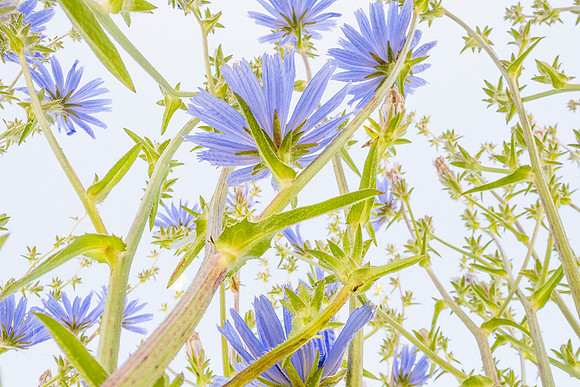
One of my favourite images from Theo's book Flowerscapes, because this flower grows so abundantly on the river banks in my own neighborhood. This photograph conveys the joyous feeling I get when I look at them
- Where at first something similar to the Romantic School seemed to be prevalent in landscape photography and the search for the epic and the Sublime, now there seems to be a movement towards the more intimate details in landscapes; the so called "Intimate Landscape". You have always focussed on these details. Do you think you are influenced by the movements within the world of photography or are you completely autonomous in this?
My preference for intimate landscapes has indeed been there since the beginning of my photography, now over 20 years ago. I believe that this preference is partly a result of the way you develop as a landscape and nature photographer in The Netherlands. If you want to make landscape images without human elements, you have no choice but to make intimate landscape images. After all, as soon as you zoom out you end up with a church tower, power pylon or wind turbine in your frame. Besides that I feel that by making intimate landscape images you can make your work more personal and that is something that has always appealed to me. Many of the sublime and epic landscapes keep getting shot in the same way and originality is therefore hard to find.
I try to keep an eye on the trends and developments within the world of photography, but I try to follow my own autonomous path in my work. So I only do so from a professional interest rather than using it as a guideline for my own work.
- Just like you I am very aware of the way our photography can affect nature. In these days of social media a location can end up on the radar of thousands or even millions of people and the effect this has on nature is very detrimental. You refrain from sharing locations that are not already widely known and I myself have stopped sharing these a long time ago, because I have seen with my own eyes what can happen to fragile parts of nature if they get over visited and trampled by herds of photographers. How do you deal with this dilemma, also in the workshops you teach?
When I started out as a professional nature and landscape photographer in 2013 I was convinced my work could contribute in a positive way to nature and the environment. After all, I figured, you are constantly working in nature and with your images you inspire others to start loving and protecting nature. Nowadays I think differently. Many professional landscape photographers have become a part of the tourist industry, because they make the main part of their income by leading tours and teaching workshops. Nature does not necessarily benefit from this, rather the contrary actually, because these trips often involve flying and groups of photographers can put a lot of pressure on an area. And if the photographs have any effect, it is to persuade others to also visit these beautiful areas.
This realization lead me to reducing my foreign photography trips; I only take one photography trip per year to Iceland and one to another location, for example the North of Spain or Portugal. I also try to leave less of a negative footprint with my travels, by opting for sustainable accommodations where possible and avoiding domestic flights. I also ask attendees of the workshops to not mention the locations when posting images on social media and also to not share these in other ways, unless they are already widely known. This works surprisingly well, because many of the locations have remained unknown even after many years.
And sometimes I visit areas or locations that would be very suitable for a workshop or photography tour because of its photographic potential, but I refrain from doing so because of the possible impact it would have on nature. As a photographer you have to be aware that there can always be a snowball effect. The fact that you organize a tour to an area once or twice a year is not that big of a deal, but beautiful photographs and enthusiastic accounts of a trip will attract other photographers and other tours and this can eventually lead to a massive magnetic effect. So sometimes I keep locations to myself. Sometimes that is a shame, because I do like to share my enthusiasm with others.
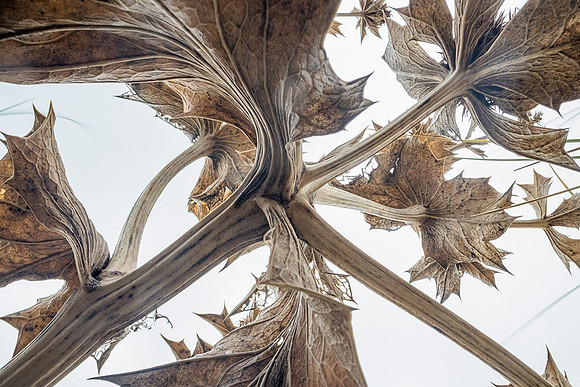
Another one of my favourite images from Flowerscapes and also a firm favourite amongst my friends and acquaintances who flipped through the book
- I assume you attract a very specific group of photographers to your workshops. This because you have an undeniably unique approach by staying true to nature in your images, but in your own style and with an artful approach. What do you like teaching them most of all and what do you most like to learn from them?
That is correct. My workshops are almost never focussed on technique and most of the time it is not even the intention to make amazing images during these workshops. I try to plant seeds, that people can use to work on their own creativity and to make their work more personal. It is, simply put, not the easiest of ways: no ready-to-use image recipes that lead to quick results, but rather working on long term development. It is wonderful to witness how some people really pick up on this and grow tremendously in a short period of time. What I learn from the attendees of my workshops and photography tours is how there is always a different perspective. It is wonderful to be keep being surprised by unique images of locations that I know very well.
Apart from the workshops, I have been doing 1:1 coaching in the past few years. That way you can work on a more personal level and it has the benefit of going beyond the surface more than is possible in a group workshop. Besides that, it also has the benefit that I can work wherever there is wifi ;-)
- I think to have understood from your words that a sense of wonder is the base of your photography. For me personally this is the fuel that drives me. Do you feel that by expressing this sense of wonder instead of focussing on the horribleness of the destruction of nature, you can achieve more than by inducing abhorrence about the decay?
Yes, you are right. My sense of wonder is leading in my photography. And I am a glass half full kind of person and so I like to emphasize the positive. I do not want to ignore all the negative developments, but I am not suitable to capture those. By focussing on beauty I keep the experience fun for myself and I do think that by doing so I achieve more.
- As photographers we show who we are in relation to the subjects we photograph. Joel Meyerowitz once said in an interview that he tries to find the humanity of the photographer in images. Is photography a suitable medium to convey emotions or does it fall short because there is still a group of people that feels photography should just be documenting ?
I certainly feel that good photography is personal and conveys something about the personality of the photographer and/or his or her feelings at the time of capturing the image. I do not think it should be taken too literally though. Moreover, there is also the viewer of a photograph, who projects his or her own personality and feelings when looking at it. The more abstract the image is, the more room for interpretation and feelings that might not coincide with those of the photographer. But even in documentary and journalistic photographs, you can see something of the personality of the photographer, for example by the choice of subject or in the way things have been captured. Photography is probably far more personal than many people realize.
- Do you think that photography has taught you about yourself? Did you get to know yourself better through your photography?
Yes, absolutely. At the same time I find it difficult to put into words what exactly it is that I have learned about myself. Maybe I can give you one example. If I look at my own work, I can see that I am attracted by chaos that I then try to organize in the best possible way. I think there is always balance in my photographs, even in the more complex compositions. When I was still working as a lawyer I already liked solving complicated issues and reducing them to manageable proportions. I think that at the root of this lies a great need for harmony. It is a need that I also feel strongly in my personal life and evidently I translate this into my work.
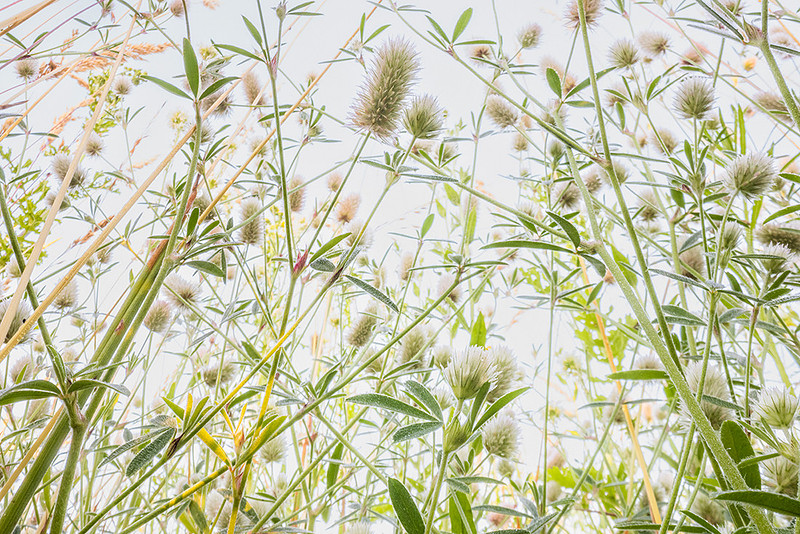
Theo's favourite image from the book is a prime example of his way of organizing what could be considered chaos into a harmonious image which conveys just how soft these flowers are to the touch
- Last question : Your book is also the message of this project, I think, but if you could summarize in just a few words what the message of this project is, what would you say? For me personally the message is that wonder is hidden in plain sight, even in those things we see every day. It is a message that my late grandmother taught me decades ago and this is probably why I feel so strongly about this book. I can not recommend it enough. It is a gem.
Ha Ellen, your personal message fits in quite well with my intentions. I would like to add : do not take things in nature for granted! Even the most ordinary flowers in the verges on the corner of the street are complex and extraordinarily beautiful organisms that are constructed in an amazing and refined way. They are worth our attention and protection!
Lastly: Ellen, thank you so much for your kind words on the book, the inspring questions in this interview and the opportunity to share my work and talk about Flowerscapes on your blog and newsletter. This is highly appreciated.
The book Flowerscapes is available for purchase in Theo's webshop, in an English as well as a Dutch version. Go to https://www.theobosboom.nl/webshop/ to purchase your copy of this amazing book.